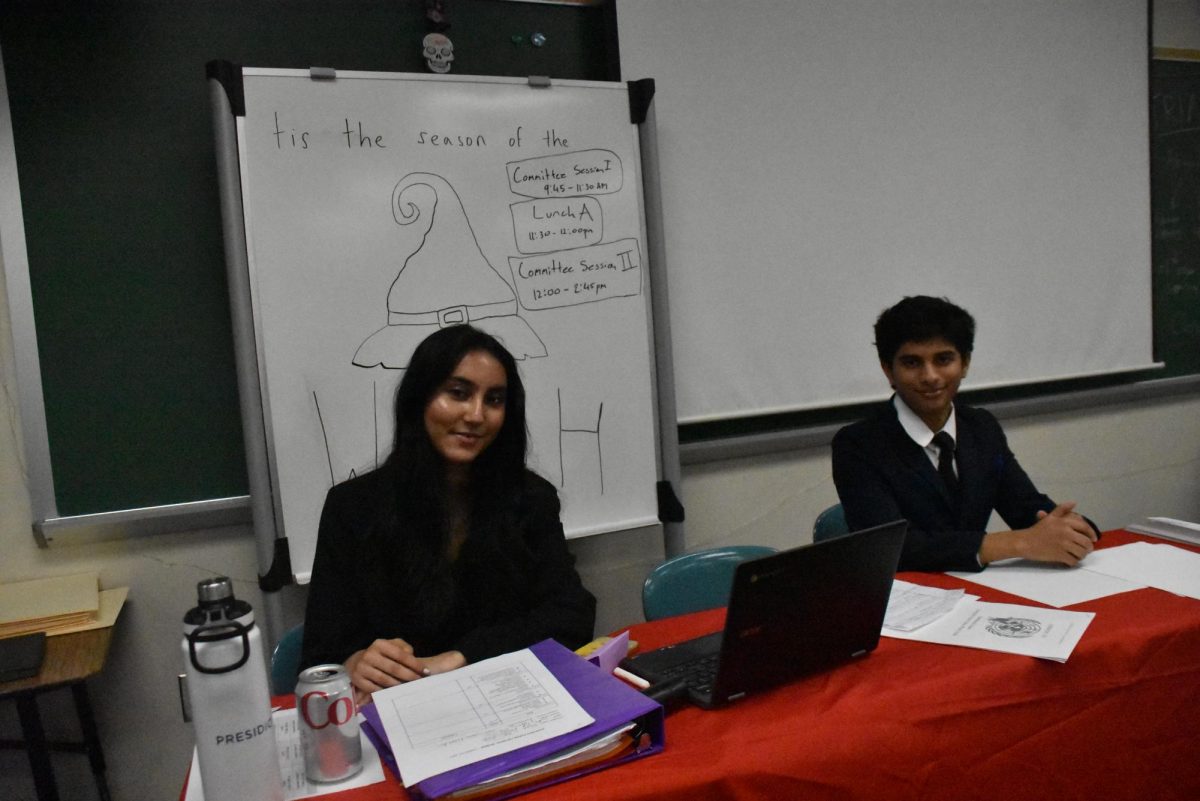
On Nov. 1, members of the CHS Model UN board gathered early to settle in, talk through the last details, and get their nerves under control before hundreds of delegates arrived at Centennial High. The extra time created a calm pocket inside a day that would soon become loud, fast, and filled with motion.
By the time students from visiting schools began walking through the entrance, the tone had already been set. The conference felt organized, confident, and ready for the largest turnout CHSMUNC had ever seen.
This year brought close to 240 delegates to Centennial, along with around 16 chairs, volunteers, and advisors who helped the event run smoothly. For Fall Coordinator Nandana Ratheesh, the turnout was not only a goal but also something she had been working toward for months.
“Last year we hit around 150 to 180 people, and with more Instagram connections following the North American Invitational Model Conference we attended last year, I knew we could get to more people this year. Our final delegate count was 237, around 240 delegates, which is around 60 to 70 more people than last year,” Ratheesh stated.
The size of the conference impacted everything from committee assignments to lunch schedules. Some rooms held almost forty delegates, which meant that pacing, ventilation, and seating had to be planned more carefully than ever. According to Ratheesh, these adjustments pushed the team to stay alert and flexible, especially in the final weeks.
“There’s always going to be some problem regarding payment, lack of registration, catering, chair availability, crisis staff availability. I had to realize that all these things are important. You can’t put off anything just taking everything one at a time, I think, because there were so many tasks,” she emphasized.
The support system behind her included the new Assistant Fall Coordinator, Sanika Shah, who helped divide responsibilities and streamline planning. Both of them reached out to schools across the county, managed deadlines, and coordinated with chairs from several different high schools.
One reason CHSMUNC stands out is the freedom that chairs have in shaping their committees. The structure stays the same each year, with four General Assemblies for beginners, two specialized committees, and two crises, but the topics come directly from the students leading them.
Senior Co-Secretary General Sandy Jayaprakesh explained that this flexibility keeps the conference fresh.
“We also tried to make the committees more unique in topics that you couldn’t really see in any other conferences. So I’ve never personally seen a Salem Witch Trials Committee, which is why I chose to do that topic. And that was obviously very unique to CHS MUNC.”
For the other Co-Secretary General, Taniska Balamurugan, this setup created a balance that allowed both new and returning delegates to grow.
“We always have about four general assemblies because we want conference to be very targeted towards beginners since it’s so early in the school year,” Balamurugan clarified. “And then we also have about two specialized and two crisis committees, which are for more advanced Model UN delegates.”
The background guides for each committee ranged from 15 to 20 pages, written and reviewed by the chairs themselves. They included past actions, treaties, and research questions so delegates could prepare for debate long before the day of the conference.
The board’s ability to work as a team mattered even more during the busiest weeks. Many of the seniors have been involved since freshman year, and their friendships helped them stay organized when the workload grew intense.
“I would say our strength as a club is definitely our friendship and the kind of bond we have,” Jayaprakesh said. “In particular, the seniors, we are all pretty close and we do hang out and talk outside of the club.”
Inside the rooms, delegates approached the day with different levels of experience. Some had never attended a conference before. Others had been competing for years. Balamurugan noticed a clear pattern in her general assembly.
“General assemblies delegates usually are very quiet in the beginning. They ask a lot of questions. They’re not really sure where to go. And then they kind of, you see a progression throughout the committee, where at the end, they’re really strong, they’re really engaged, they know what they’re doing, and they’re very confident.”
The more advanced committees took a different tone. Crisis rooms were loud, unpredictable, and filled with dramatic updates. According to Jayaprakesh, collaboration with crisis staff changed everything about her Salem Witch Trials committee.
“At one point, we had an execution and a sacrifice and an exorcism,” she explained. “And yeah, that was really cool to see, and I think it kind of made the dele gates a bit more excited too, as they were, you know, started off a bit scared a bit nervous and anxious, and then seeing all this happen, it kind of made them come out of their shell a bit more.”
Ratheesh observed the same excitement while selling candygrams during lunch, with a freshman. “She said, I’m loving my committee, it’s so much fun. I want to send it to someone I’m friends with that I met through committee. And I thought that the fact that she was able to make a lasting connection from a couple hours before lunch even started was nice.”
Finally, the closing ceremony brought together everything the board hoped the conference would represent. Delegates sat with the people they had debated with all day, waiting for awards and talking in low, hushed voices about who might win.
For Balamurugan, this was one of the most memorable moments.
“I could tell that almost every single person that won an award was a beginner, so I was really impressed by how they carried themselves, the kind of discussion that they had, especially because our topic was about the Russia and Ukraine conflict, and that’s very controversial, but everyone in my committee was very respectful and very mature.”
Each year, CHSMUNC grows in size, variety, and ambition. The students who run it continue to search for ways to improve it.
Ideas for next year include clearer website directions for first-time delegates, more scheduled breaks, and possibly adding more committees to match the rising number of participants.
Before planning for next year begins, many members of the board have been thinking about what this conference revealed to them. The effort, the coordination, and the quiet work that no one notices seemed to shift how they viewed responsibility and what it means to guide something larger than themselves.
“Leadership isn’t really just about being on the front lines, but also being in the background and making sure that everything is getting done.” Balamurugan highlighted.